Flying Lion, Inc. is proud to announce the availability of DroneBooth™ (Patent Pending) — a rapidly deployable enclosure that enables organizations to run drone dock operations 24/7 in locations where permanent infrastructure isn’t available or practical.

No power lines. No fiber runs. No costly buildout. Just a parking-space-sized footprint and the Flying Lion team handling the rest.


What Is DroneBooth™?

DroneBooth is a standalone, 100% self-contained enclosure designed to host smaller drone dock systems in the field. It runs on its own power and its own internet connection, making it capable of true multiday autonomous operations — completely independent of local utilities.


At just 40″ (W) × 48″ (L) × 80″ (H) — roughly the footprint of a standard pallet — it fits anywhere a vehicle can park. Flying Lion’s team of technicians delivers, installs, calibrates, and maintains every unit throughout the lease term.


DroneBooth currently supports:

  • DJI Dock 2 and Dock 3
  • Skydio Dock for X10
  • Hex (formerly Hextronics) Universal Dock


Key Benefits

  • 24×7 operational availability
  • No power or internet infrastructure required
  • Fewer people in the field — safer and more cost-effective
  • Faster aerial response and additional coverage area
  • Standalone multiday operations out of the box
  • Full FAA regulatory support included
  • Remote pilot staffing — use your team or ours
  • Flexible monthly or annual lease options


DroneBooth was built to make rapid deployment simple — if you have a secure parking-space-sized location near your operating area, you can get aerial coverage where you need it. And because DroneBooth is designed to leverage Flying Lion’s remote pilot services, organizations can extend operations by leveraging Flying Lion’s Beyond Line of Sight (BVLOS) waivers for a turnkey 24/7 aerial security solution. — Barry Brennan, Founder & President, Flying Lion, Inc.


Full-Service Deployment — Flying Lion Handles Everything


Every DroneBooth deployment is fully supported by Flying Lion’s team of technicians and FAA-certified pilots. Organizations don’t need to hire drone experts or navigate regulatory complexity on their own. Flying Lion provides:


  • Deployment, Installation & Configuration — delivered and calibrated to operational readiness
  • FAA Regulatory Support — including BVLOS waiver support for autonomous operations
  • Remote Pilot Staffing — use your licensed pilots or Flying Lion’s remote operations team
  • Ongoing Maintenance — Flying Lion keeps every unit performing throughout the lease
  • Flexible Contracting — monthly or annual leases to match your operational timeline


Flying Lion has operated in the Drone as First Responder (DFR) space since 2014, with deep experience serving law enforcement, public safety agencies, municipalities, and private enterprises.


See DroneBooth™ Live at ISC-West 2026


Flying Lion is making the worldwide debut of DroneBooth at ISC-West in Las Vegas. Stop by to see the system in person and speak with our team.


📍 ISC-West Conference — Booth #14140

📅 March 25–27, 2026 | Las Vegas, NV


Ready to Deploy?


DroneBooth is available now on monthly and annual lease agreements. Whether you’re planning for a single upcoming event or building a long-term aerial security program, Flying Lion can assess your site, handle the regulatory paperwork, and get you operational faster than any fixed-infrastructure alternative.


Contact us at sales@flyinglioninc.com or visit flyinglioninc.com/DroneBooth to learn more.
 

This year, our team had the opportunity to participate in the DRONERESPONDERS National Public Safety UAS Conference (NACON)—one of the premier gatherings for public safety professionals, aviation leaders, and technology innovators shaping the future of unmanned aircraft systems (UAS).

Hosted in Williamsburg, Virginia, NACON brought together agencies and industry partners from across the country to exchange ideas, share operational experience, and push the boundaries of how drones are used in real-world public safety missions.

A Meeting of Experience and Innovation

Our participation at NACON reinforced what many in the industry already recognize: public safety drone programs are no longer experimental—they are operationally critical.

Throughout the conference, discussions centered on:

  • The continued evolution of Drone as First Responder (DFR) programs
  • Integration of drones into real-time crime centers and emergency response workflows
  • The growing importance of airspace coordination and UAS traffic management (UTM)
  • The need for standardization, training, and professionalization across agencies

NACON continues to serve as a platform where these conversations move beyond theory and into practical application, bringing together professionals who are actively deploying and refining these systems in the field.

Strengthening Partnerships Across the Industry

One of the most valuable aspects of the conference was the opportunity to connect face-to-face with agencies, partners, and operators who are leading the charge in public safety UAS.

From reconnecting with long-standing partners to building new relationships, NACON continues to demonstrate that progress in this space is driven by collaboration. Conversations throughout the event highlighted how agencies are:

  • Scaling their programs responsibly
  • Leveraging new technologies to improve response times
  • Sharing lessons learned to elevate the entire community

These interactions are what ultimately translate into safer, more effective operations back home.

Supporting the Broader Mission

We were proud to support the mission of DRONERESPONDERS, an organization dedicated to helping first responders implement and advance drone programs across the country.

Beyond the technology itself, NACON also highlighted the importance of community—supporting initiatives, sharing knowledge, and contributing to programs that help develop the next generation of public safety professionals.

To view the original LinkedIn post, follow the link below:
https://www.linkedin.com/posts/droneresponders-dfr-nacon-ugcPost-7438235552392441856–wpT?utm_source=share&utm_medium=member_desktop&rcm=ACoAADLrrmEBbReQCUi0AKtWcbGSU6HzrGACQrA


In a recent demonstration of how technology continues to strengthen public safety operations, the Brea Police Department utilized its Drone as First Responder (DFR) program to assist in the capture of credit card fraud suspects operating within the city.
When officers identified suspicious activity tied to an active fraud investigation, aerial support was rapidly deployed. Instead of relying solely on ground units, the department launched its DFR platform to gain immediate situational awareness from above. The real-time aerial perspective allowed officers to track movements, coordinate positioning, and make informed decisions while maintaining public and officer safety.
Aerial Coordination in Action
A Remote Pilot in Command (RPIC) from Flying Lion assisted during the mission, providing professional flight operations support. With disciplined execution and adherence to established operational protocols, the aircraft delivered live intelligence directly to responding officers.
The aerial feed helped confirm suspect locations and monitor movements without escalating the situation. By maintaining overwatch, officers were able to coordinate their approach effectively and bring the incident to a safe resolution.
To view the video, follow the Instagram link to the post:


Flying Lion, Inc. is pleased to announce two upcoming Drone as First Responder (DFR) Remote Pilot Training sessions designed specifically for public safety agencies building or expanding DFR programs.

This program consists of a one-day in-person course, followed by three hours of dedicated 1:1 remote training with a Flying Lion instructor, including REMOTELY flying scenarios in FLI Town. It delivers focused instruction on the tactics, techniques, procedures, and regulatory considerations essential to successful DFR operations.

📅 2026 Training Dates & Location | 📝 Register Here: flyinglioninc.com/dfrtraining

  • March 16, 2026 – Brookhaven, GA
  • April 1, 2026 – Beverly Hills, CA

Both sessions provide comprehensive classroom instruction paired with scenario-based learning tailored to real-world public safety environments.

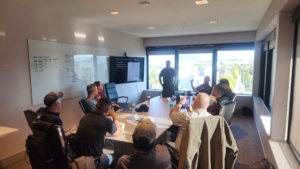
DFR instructor surrounded by public safety class.

Recent DFR Training Class

Course Overview

This training is structured to give remote pilots, supervisors, and command staff practical, operational knowledge they can immediately apply in the field.

Classroom Instruction Includes:

  • DFR program structure and operational philosophy
  • FAA regulatory framework and compliance pathways
  • Risk mitigation and safety management
  • Evidence retention and case law considerations
  • Tactical deployment scenarios (pursuits, perimeter containment, high-risk calls)
  • Communications and coordination with ground units

Practical Application:

Participants engage in guided, scenario-driven exercises designed around real call-for-service situations, reinforcing both regulatory discipline and tactical execution.

Additional POST Certified Training Courses

In addition to the DFR Remote Pilot Training, Flying Lion also offers additional POST certified training courses tailored for public safety UAS programs. These courses are designed to strengthen operational readiness, regulatory compliance, and tactical integration within law enforcement and public safety environments.

Agencies interested in expanding their training portfolio are encouraged to inquire about available POST-certified offerings.

Early Bird Special

Those who register early are eligible for a special Early Bird rate, offering discounted tuition for advance sign-ups. Agencies are encouraged to secure seats as soon as possible to take advantage of this savings opportunity.

Space is limited for both locations.

To view full course details and secure your seat, visit:
https://flyinglioninc.com/dfrtraining/


Security along critical freight corridors requires more than visibility — it requires coordination, technology, and disciplined execution. Along the Alameda Corridor, where cargo moves daily between major ports and the national rail network, maintaining operational integrity is essential to protecting commerce and public safety.

ABL’s recent spotlight highlights how strategic partnerships are strengthening freight rail protection in real-world conditions. Through collaboration with experienced aviation and security professionals, enhanced aerial awareness and rapid response capabilities are being integrated into rail operations.

That’s why the Alameda Belt Line (ABL) is spotlighting the work of its security partner — Flying Lion, Inc. (FLI) — and invites you to follow the link to see the full post and watch the video.


At Flying Lion, we operate on a simple principle: make Public Safety Operators safer and more cost-effective by unlocking the full potential of drone technology.
With nearly 100,000 DFR missions, completed over the last decade, we don’t just understand the landscape – we helped build it (Thank You – Chula Vista Police Department). We aren’t here to sell you a specific system; we are here to provide the end-to-end operational solutions that maximize your uptime and community impact.
Why Partner with Flying Lion?

  • Platform Agnostic: We are independent but connected. We work across the entire ecosystem: AirData LLC, AVSS, Axon, BRINC Drones, Centinus, Dedrone, DJI, Draganfly Inc., DroneSense, Inc., Echodyne, Esri, FlightOps.io, Flock, FlytBase, Hex, ideaForge. MatrixSpace, Motorola Solutions, Nightingale Security, Nokia, Paladin, Parrot, Sensys Technologies, Skydio, TruWeather Solutions, Red Cat Holdings, uAvionix Corporation, VOTIX, to ensure you have the best tools for your specific needs.
  • The DroneBooth™ Advantage: Our fully self-contained, mobile BVLOS solution is a game-changer for temporary rapid deployments.
  • Remote Operations Management: From skilled pilots to on-the-ground technicians, we provide end-to-end operational support to maximize uptime, safety, and cost efficiency – we sell solutions not systems.
  • Operational Excellence: Whether you need DFR program implementation, remote pilot staffing, or FAA consultation, we provide the expertise to get you airborne safely.
  • Mission-Ready Training: We offer comprehensive Part 107 prep, NIST flight training, and specialized Remote Pilot programs.
  • Commercial Operations – Confined Space and Facade Inspections: Via our commercial division, Sky Ladder Drones, both municipalities and private companies leverage our services which include mapping, LIDAR, facade inspections and confined space inspections.

Our goal is to work alongside visionary leaders to bring evolutionary technology to their communities.

To those who serve their communities: Thank you for your commitment; how can Flying Lion help?

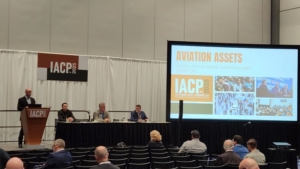
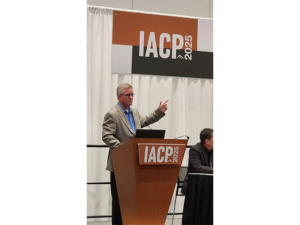
Success Stories and Tactics: How Crewed and Uncrewed Aircrafts Can Support Joint Operations

Nice job speakers:
Craig Benz – Lt and Chief Pilot, Minnesota State Patrol
Barry Brennan – Police Reserve, Redondo Beach Police Dept./Flying Lion
Don Redmond – Capt. (Ret.), Chula Vista Police Deptartment
Lance Scott – Georgia State Patrol

For over a century, crewed aircraft have supported public safety operations, with some of the earliest uses dating back to 1914-1916. Fast forward to 2025, and drones have emerged as a powerful tool for both large and small public safety agencies. After years of debate and adjustment, many agencies across the country have successfully learned to integrate crewed and uncrewed aircraft on the same incident-with impressive results. Presented by the IACP Aviation Committee, this panel will share success stories and tactical insights on how coordinated operations between crewed and uncrewed systems have led to mission success.
Target Audience: Command Staff/Supervisors

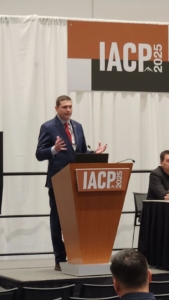
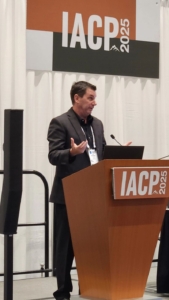
Some photos from the session:


Flying Lion Vice President Stephen Katz recently sat down with Desi Ekstein on the Beyond the Drone podcast to discuss the future of UAS operations, regulatory challenges, and how public-safety agencies can build safe, scalable drone programs.

During the interview, Steven highlighted several key themes that define Flying Lion’s approach:

✈️ Regulatory-First Mindset
Flying Lion starts with the rules—not the aircraft. Every program is built on a foundation of FAA compliance under Parts 91 and 107, ensuring safe and repeatable operations.

📡 Turning Waivers Into Real-World Operations
From drafting waivers to coordinating with ATC and supporting mission-ready deployments, Steven explained how Flying Lion guides agencies through the entire life-cycle of a drone program.

🗺️ Data & Geospatial Intelligence
GIS mapping, tailored airspace requests, shielded volumes, and risk-mitigation overlays are now essential tools for responsible and efficient UAS operations.

🚁 Preparing for BVLOS and the Next Era
As BVLOS and autonomy advance, Flying Lion is helping agencies stay ahead—aligning with emerging frameworks and building operational processes that meet both today’s and tomorrow’s expectations.

🤝 A Culture Built on Partnership
Flying Lion’s success is rooted in collaboration with law-enforcement agencies, ATC managers, FAA processors, and industry partners nationwide.

If your agency is looking to expand its drone program, advance toward BVLOS, or strengthen its regulatory footing, Flying Lion is here to help you build a safer, smarter, and scalable future.

Listen in to the full conversation on the podcast Beyond the Drone by Women and Drones.


The Oceanside Police Department has officially launched a 13-month “Drone as First Responder” (DFR) pilot program, a development recently covered by CBS 8. The program, approved unanimously by the City Council in April, represents a significant step toward enhancing emergency response efficiency and officer safety.

Aerial Innovation for Faster Response

Operating from a strategically placed rooftop location in downtown Oceanside, the drone can be dispatched to incidents—such as criminal activity, missing persons, or other emergencies—and reach the scene in about one minute, substantially faster than traditional ground units. It transmits live video feeds to responding officers and the Real-Time Crime Center (RTCC), improving situational awareness before officers arrive.(ci.oceanside.ca.us)

The program is being implemented in partnership with Flying Lion Inc., which has been working alongside the Oceanside Police Department to establish the DFR program. Flying Lion is staffing the rooftop site with FAA-certified Remote Pilots in Command (RPICs) and visual observers, ensuring each mission is conducted safely, in compliance with FAA regulations, and aligned with department protocols.

We are proud to announce that Steven Katz, Vice President of Flying Lion, has been featured in the latest issue of AirBeat publication. In his insightful article, Katz delves into the evolving role of drone technology in public safety and emergency response.

Katz discusses how drones have become indispensable tools for law enforcement agencies, enhancing situational awareness, improving response times, and ensuring officer safety. He also highlights the importance of integrating drone operations with existing emergency response protocols to maximize efficiency and effectiveness.

Drawing from Flying Lion’s extensive experience in deploying drones for various public safety missions, Katz provides real-world examples of successful drone integrations. He emphasizes the need for ongoing training and collaboration between drone operators and emergency personnel to fully realize the potential of this technology.

The article also touches upon the regulatory landscape, discussing the importance of adhering to FAA guidelines and obtaining necessary waivers to operate drones in complex environments.

We invite you to read the full article to gain deeper insights into how Flying Lion is at the forefront of drone technology in public safety. You can access the publication here:AirBeat Publication.